
Scientific Bias & the Neurodivergent Cannabis Community: Why Real-World Data is Critical to Medical Advocacy
A recent publication in The Lancet Psychiatry is adding to the growing body of peer-reviewed literature that stigmatizes cannabis and cannabinoid use for mental health, focusing on the lack of “high-quality” supporting research. While the authors and the mainstream media are interpreting this to mean there is no evidence to support the therapeutic benefits of cannabis for mental health, this could also be a direct result and relevant example of scientific bias. When viewed through a neurodiversity-affirming and patient-centered framework, the findings of this study clearly point towards a naive, biased, and discriminatory interpretation of one simple fact: the research world is not inclusive nor is it up to date on the lived experiences of the neurodivergent cannabis community. Scientific bias is a serious issue in cannabis research, contributing to unnecessary research barriers, perpetuating the stigma, and increasing risk of harm to the marginalized neurodivergent cannabis community.
What is Scientific Bias? What is Neurodiversity?
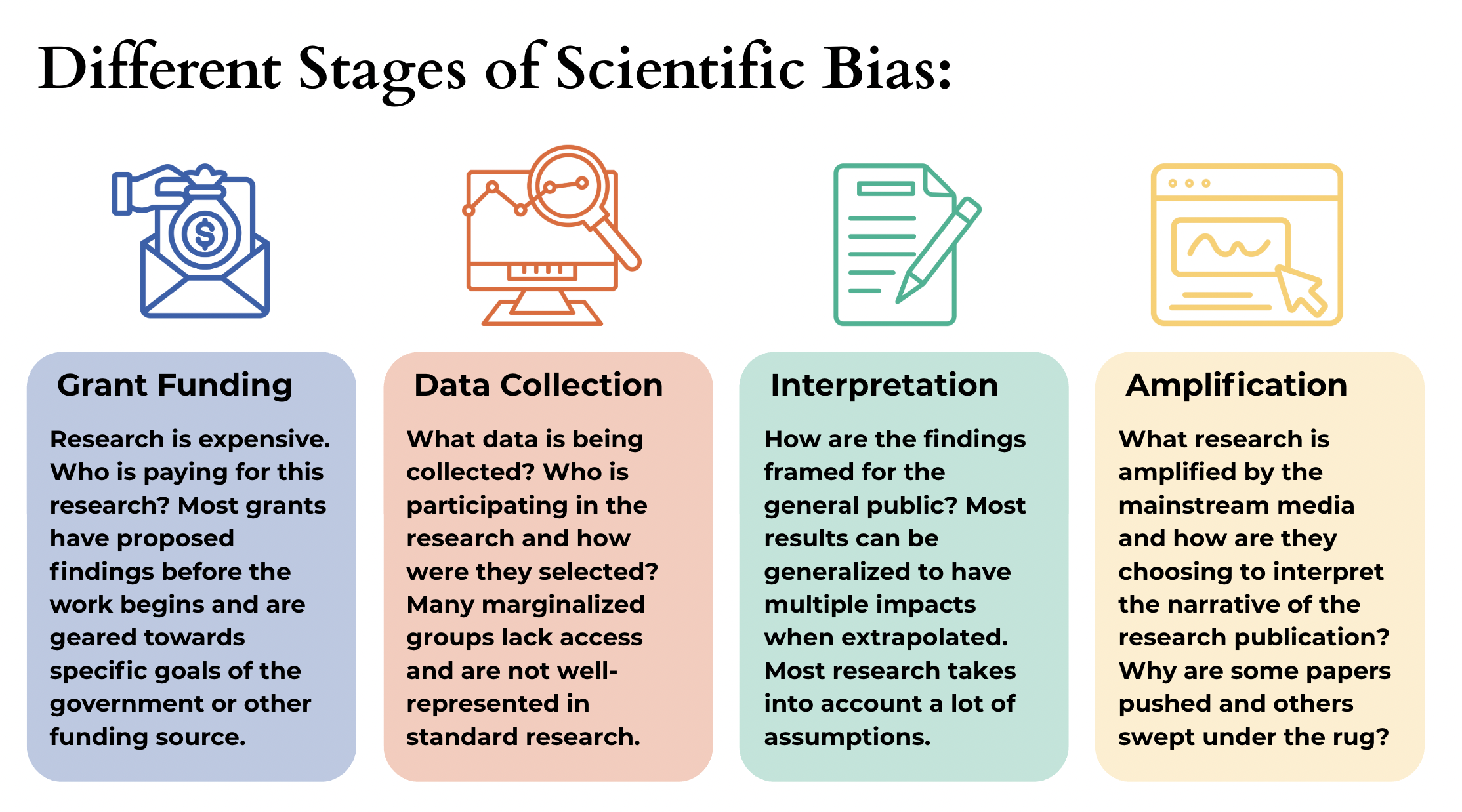
Despite science being framed as impartial and unbiased, the reality is that the act of performing, analyzing, interpreting, and amplifying science is a human act; and all humans are biased. Scientific bias refers to multiple types of subjective actions that can and do regularly occur in the scientific process. When we’re talking about cannabis research, it’s incredibly important to understand that scientific bias exists at every step of the process from the funding sources that pay for the research to the scientists who write up the results. A recent publication in the Lancet Psychiatry serves as an example of how multiple aspects of scientific bias contribute to the continued stigmatization in cannabis research, specifically as it pertains to the neurodivergent cannabis community.
“Neurodivergent” is a non-medical umbrella term that describes multiple mental health categories and highlights mental health in the context of a disability-rights advocacy movement framework that is identity based over pathology. Instead of framing mental health challenges as “illnesses” or “sicknesses,” a neurodiversity-affirming approach recognizes that all brains are different and acknowledges other compounding factors that contribute to the social construction of disability like trauma, race, and socioeconomic status. The scientific journal article fails to mention the word “neurodivergent,” “neurodiversity,” or acknowledge the movement at all. The very first sentence of the article frames “mental disorders” as a “global burden of disease,” a framework and perspective that continues throughout the entire publication.
The “Lack of Evidence” Presented in the Wilson et al Meta-Analysis
While the team identified 5,431 studies on cannabis and mental health, only 62 met their inclusion criteria, meaning this paper only considered about 1% of the relevant research on the subject. While most categories only contained 4 or less separate studies for comparison, Cannabis Use Disorder and Psychotic DIsorders had over twice as many studies to meet inclusion criteria. This shows how the focus on the negative aspects of cannabis use in research affects downstream analyses. A major finding of the paper was limited information on the other categories like ADHD, bipolar, and OCD.
This “lack of evidence” does not mean cannabis is ineffective, it means there were not enough studies for consideration. The random mixed-effects modeling analyses the authors performed are most accurate when there are more datasets available to consider. Running this type of analysis on an incredibly small subset of 2-4 studies increases the variance and decreases the strength of the findings. Identifying that there isn’t enough evidence could mean we have not yet focused on the problem with the correct lens rather than jumping to the conclusion that the medicine is ineffective.
Additionally a vast majority of the studies included were only studying the oral or edible effects of cannabis, with little to no regard for the differences in formulations administered besides presence of THC alone, CBD alone, or a combination of THC and CBD. Our preliminary data and community insights show a majority of medical cannabis patients consume through multiple methods with specific formulation needs and with significant emphasis on quality of products that are not considered in clinical studies such as sun-grown or full spectrum products. This lack of quality control in academic and clinical settings is another significant barrier to cannabis research. Simply put, most academic and clinical researchers have no idea what a high quality product would look like and there are limited controls and standards put in place across different research groups. Instead, the historical standards of assessment are built around framing cannabis as a harmful drug with no medical value.
Finally, the inclusion criteria for patients in clinical settings often is not representative or accessible to the neurodivergent cannabis community. This community is an incredibly diverse group that is unified by chronic issues that lack standard treatment. This often results in isolation and exclusion from standard medical care. Many of us meet the criteria for an invisible disability, or a physical, mental, or neurological impairment that is not immediately obvious to others, yet significantly limits a person’s movements, senses, or day-to-day activities. Like others in the disability rights’ movement, we have been and are currently being marginalized and discriminated against financially, medically, and legally for benefitting the most from a demonized natural medicine. And like others in the disability rights’ movement, we deserve to be considered experts on our own needs.
For many of us this isn’t a choice between cannabis and complete sobriety. This is a choice between cannabis and psychopharmaceuticals, cannabis and alcohol, or cannabis and other harder substances. Cannabis as a reduction of harm can’t and shouldn’t be compared to a placebo for our community. This finding of lack of evidence itself lacks the context of the reality of most neurodivergent cannabis patients.
When the Data Doesn’t Mirror Reality, It’s a Sign of Marginalization
While this is to-date the largest meta-analysis of the peer-reviewed studies on cannabis and mental health, it is far from the largest or oldest source of information on the topic. The very first introduction of cannabis into Western research and medical systems was to the British Royal Society in 1689 when Robert Hooke said it would “be of considerable use for Lunaticks, or for other Distempers of the Head and Stomach.” Since then, real patients have been caring for each other in community with cannabis for generations. The real world evidence in the community is clear: this is a medicine with real-world value for many people who have limited alternative options.
In our current reality where psychopharmaceuticals are pushed on the masses despite high rates of side effects and non-compliance, cannabis represents an alternative that has high efficacy for a huge array of chronic issues. Many medical cannabis patients are disenfranchised by the medical system from a young age and have found cannabis to help with multiple aspects of health including common co-morbidities like gastrointestinal issues and chronic pain. Understanding the net benefit of cannabis in quality of life is more complex than our typical understanding of modern medicines.
When real-world outcomes are systematically excluded from what is considered “valid” evidence, the result can look like “scientific rigor” but in actuality be a sign of structural marginalization. Many of the most vulnerable and those who benefit the most from medical cannabis will never access these scientific studies. A majority of us have found our healing through community care, not a doctor’s prescription pad. The lack of clear evidence for cannabis and mental health is a byproduct of a system that has failed to measure what matters most to the people who are most impacted by it.
Cannabis has saved thousands of lives, full stop. Are there risks? Yes. Are neurodivergent medical patients more vulnerable? Yes. This is why we desperately need impactful research from within our community and widespread public education on harm reduction practices with cannabis, quality of medicine standards, and real-world examples of cannabis as an integrative medicine. Like so many other risks in life, an abstinence-only approach will only increase the overall risk of public harm, especially in our community. Gaining a deeper understanding of how the existing neurodivergent cannabis community functions can add necessary and relevant information on therapeutic benefits and public safety.
Community, Real-World Data, and Science Advocacy
The concept of “high-quality research” has become a gatekeeping phrase in cannabis science that prioritizes controlled, reductionist study designs and dismisses the complexity of real-world use. While there is undeniably a benefit to clinical trials, there’s no reason they should be a gold standard when a majority of clinical trials fail to capture complex, mixed populations, individualized dosing and formulation considerations, or multi-compound plant medicines interacting together with unique lifestyle changes. They are useful tools for information, but they do not capture lived experience.
The “evidence gap” that exists in cannabis research is constructed and intentionally devalues the community knowledge that has existed for generations. This is a conversion about power dynamics within systems of social hierarchy. Who defines what counts as valid evidence? Who gets included in the study design? Who decides how the outcomes are interpreted? The disability rights movement has answered this question with the phrase “Nothing about us without us” and it’s time for the neurodivergent cannabis community to advocate for ourselves in the same way.
Real-world data and patient reported outcomes allow us to truly understand what information is impactful for the community. It shifts the focus from proving harm in artificial, constructed clinical environments and protocols to understanding the risks, benefits, and variability that occur in real life. The future of research on cannabis and mental health should include the community who benefit the most and have the most lived experience with the plant. For more data on a neurodiversity-affirming perspective on medical cannabis consumption created by our community for our community, check out our white paper here.