What We Learned from Studying Real World Use of Vivazen’s Kratom Energy Supplement
Summary: We have been gathering real world data on a full plant extract of Mitragyna speciosa, often referred to as kratom, a botanical traditionally used for sustained energy and focus. In a three week observational study of 103 participants using a kratom-based energy shot formulated with Cordyceps militaris, we observed meaningful improvements in well-being, cognitive function, and productivity, alongside reductions in fatigue. Participants reported feeling more focused, energetic, and productive, with many noting better performance compared to other energy products and an average gain of over one additional productive hour per day. These findings suggest that thoughtfully formulated full plant products may support sustained energy and mental clarity while offering a potential alternative to conventional energy drinks.
For as long as humans have needed to stay alert and work through physical or mental fatigue, plants have played a central role in supporting energy. Long before modern energy drinks existed, cultures around the world relied on botanicals like tea, coffee, coca leaves, and ginseng to support stamina and focus. These plants were used intentionally and were often embedded within traditional medical and cultural systems (Heckman et al. 2010; Kennedy and Scholey 2003).
Today, interest in traditional natural products for energy is growing as consumers look for alternatives to synthetic stimulants and sugar-heavy products. In Southeast Asia, kratom, Mitragyna speciosa, has long been consumed as a tea to support endurance and focus during long workdays. Native to Thailand, Malaysia, and Indonesia, kratom has a documented history of traditional use among laborers seeking sustained energy rather than acute stimulation (Assanangkornchai et al. 2007; Singh et al. 2014).
New observational data from the Network of Applied Pharmacognosy and MoreBetter. examined a kratom-based ‘Natural Energy Shot’ from Vivazen formulated to support energy and productivity. The formulation combines kratom leaf extract with the medicinal mushroom Cordyceps militaris. Cordyceps militaris has been studied for its role in supporting cellular energy production and oxygen utilization.
To evaluate real-world performance, data were collected from 103 participants over three weeks, including a one-week baseline period followed by two weeks of optional product use. Some participants had experience with energy supplements, with the majority consuming products for focus or energy benefits multiple times per day.
Participants completed validated wellness and cognitive questionnaires throughout the study. Results showed meaningful improvements across several key areas. Overall well-being improved substantially, with WHO-5 scores increasing by approximately 50 percent. Cognitive function improved as well, with a 15 percent increase in PROMIS cognitive function scores, indicating better focus and mental clarity.
Fatigue decreased at the same time. Participants reported nearly a 20 percent reduction in fatigue scores and more than a 30 percent decrease in the frequency of feeling worn out. Participants were also 27 percent more likely to report feeling productive on any given day, with an average gain of more than one additional hour of productive time per day.
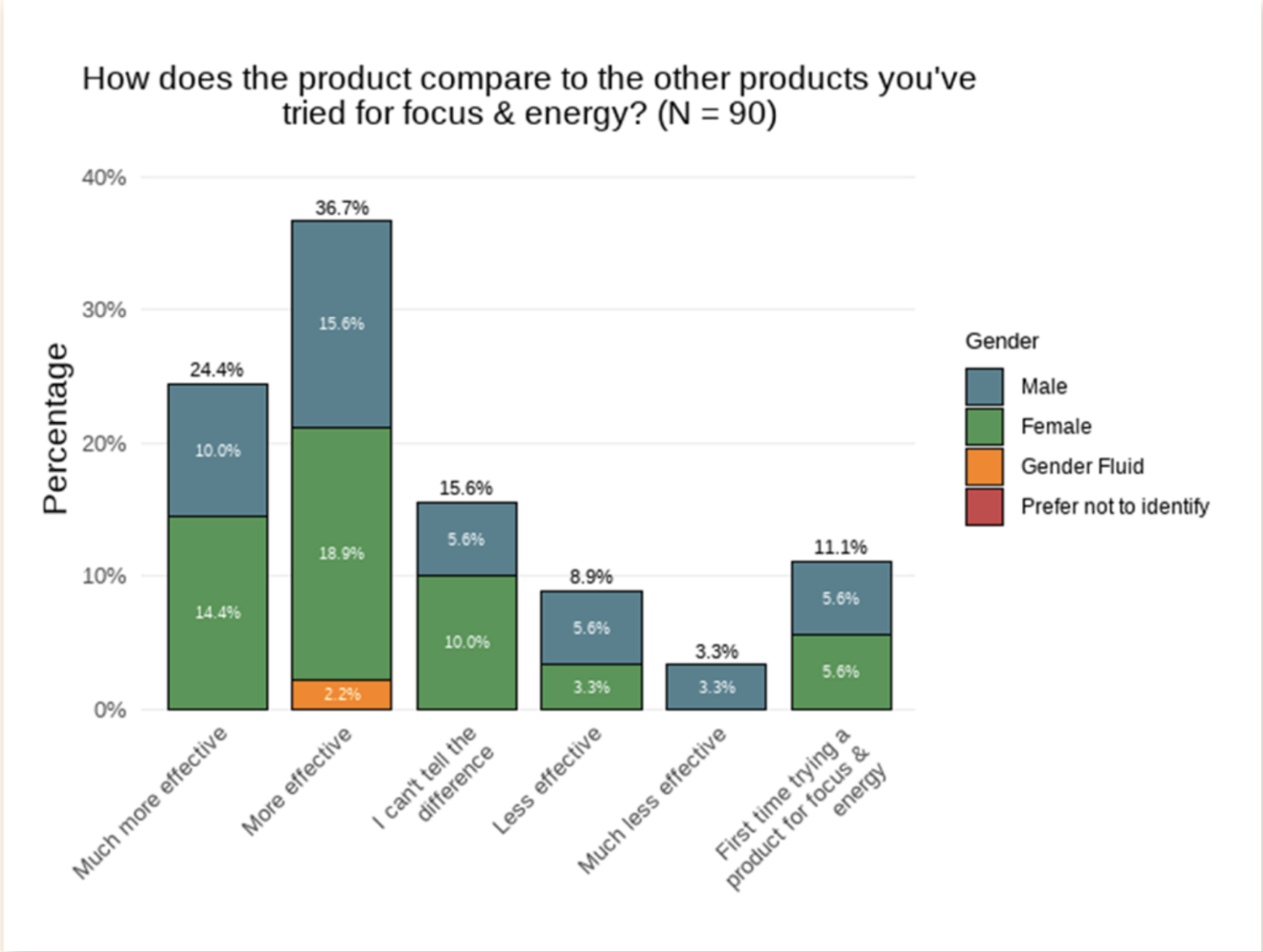
When asked to describe their experience, participants most often used words like active, focused, energetic, and productive; most participants noted that this product worked better for focus and energy compared to other ‘energy’ products they’ve tried in the past. Seventy-eight percent reported feeling a need for a product like this several times per week or more, and 82 percent said the product met or exceeded their expectations.
Together, these findings suggest that intentionally formulated natural products may support clearer focus, sustained energy, and productivity without leaving people feeling worn down by the day. Products like Vivazen’s Natural Energy Shot may also offer a harm reduction pathway by providing an alternative to traditional energy drinks, which nearly 30 percent of participants in this study reported using regularly.
***These statements have not been evaluated by the FDA. These products are not intended to diagnose, treat, cure or prevent any disease.
References
Heckman, M. A., Weil, J., and Gonzalez de Mejia, E. (2010). Caffeine (1,3,7-trimethylxanthine) in foods: A comprehensive review on consumption, functionality, safety, and regulatory matters. Journal of Food Science, 75(3), R77–R87.
Kennedy, D. O., and Scholey, A. B. (2003). Ginseng: Potential for the enhancement of cognitive performance and mood. Pharmacology Biochemistry and Behavior, 75(3), 687–700.
Assanangkornchai, S., Muekthong, A., Sam-Angsri, N., and Pattanasattayawong, U. (2007). The use of Mitragyna speciosa (“kratom”), an addictive plant, in Thailand. Substance Use and Misuse, 42(14), 2145–2157.
Singh, D., Müller, C. P., and Vicknasingam, B. K. (2014). Kratom (Mitragyna speciosa) dependence, withdrawal symptoms, and craving in regular users. Drug and Alcohol Dependence, 139, 132–137.