
Demystifying Dabbing
Cannabis concentrates are often seen as a taboo conversation topic filled with stigma, fear, and an overall lack of resources. However, even with concentrate use becoming very popular, the lack of resources still persists. The cannabis vaping industry has surpassed the flower industry monetarily in California, meaning more individuals are consuming these products each day (Jackson, 2026) however, science is not keeping up with this pace. Centuries of concentrate use and increased access to resources can teach us why these substances are used, along with how they are a commodity in cannabis consumption, medicine, and science. Given that these products contain high levels of cannabinoids reaching upwards of 60%, it is important to educate individuals on safe concentrate practices, proper dosing, and consumption methods. It is also imperative to note the importance of their accessibility for patients and recreational consumers alike.
If someone is curious about dabbling in the world of concentrates, it is important to follow the ‘start low and go slow’ method. This allows individuals to build a tolerance to the large amount of cannabinoids being consumed in such a small amount of product and time. Dabs do not have to be sizable globs thrown onto a red hot nail, although this is the preferred method of some seasoned professionals and daring newcomers. However, beginners can always start their dab journey by utilizing more controllable methods such as electronic rigs. This, along with the help of the aforementioned seasoned professional, can result in a positive experience rather than a life long fear toward concentrate. Electronic rigs can offer reproducability, as well as ease-of-use for some consumers.
Resin or Rosin?
An important identifier for each of these concentrates is the name. This indicates the texture of the product and sometimes the extraction method utilized to produce it. Each extraction method has its own benefits and downfalls and many regular concentrate consumers have strong preferences for certain methods. One key difference to note is that while two products can exhibit the same physical characteristics, they can differ in composition or extraction method. Resin or live resin is a concentrate that is produced through solvent extraction. This means a solvent, in many cases butane, is pushed through raw, flash frozen cannabis buds. The product that exits the wash must then be purified to remove any residual solvents, resulting in the final product, resin. Rosin contrarily is obtained without hydrocarbon solvents, meaning heat and pressure are applied without chemical manipulation to raw cannabis flower to extract oils rich in cannabinoids and terpenes.
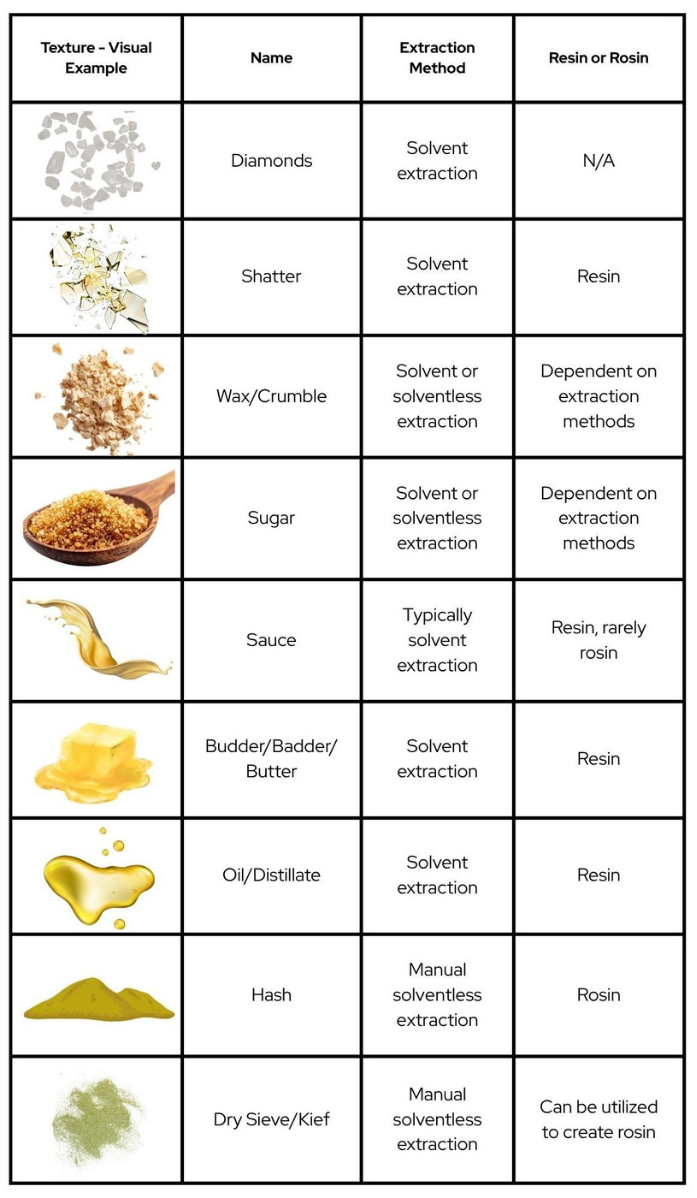
Many individuals who utilize concentrates have an underlying reason for such, whether that is a high tolerance to cannabinoids, an inability to consume large quantities of smoke, or overall accessibility. Concentrates and vapes can be more discrete than flower for many consumers. For those who have a high tolerance to flower, it is important to note not only the differences in cannabinoid levels found in dabs versus flower, but also other chemical components such as terpenes and minor cannabinoids. The heightened concentrations of each of these molecules in the presence of THC, contribute greatly to the entourage effect, resulting in an amplified experience.
Dab Rigs
The tools and techniques for dabbing and extracting concentrates have changed rapidly since adult-use became legal. In the past most dabs were consumed by using some sort of open flame, a butane torch or even a gas burner (knife hits!). Concentrates are consumed through a variation of a glass bong outfitted for concentrates - called a rig when used for dabs. The bowl piece where ground flower material is placed is replaced by a “nail” or “banger/bucket”. “Nails” and “buckets” can be made of metal (titanium) or quartz / ceramic, they can be shaped like a bowl or a cylindrical piece sticking out of the bong. Rigs often made of glass (or silicone, or plastic) contain a chamber for holding water, a mouth piece, and the nail. The banger or nail is then heated using a flame to reach a very high temperature, then the concentrate is applied to the banger or nail with a metal tool and inhaled through the mouthpiece after the aerosol travels through the body of the rig. Recently electronic dab rigs have become very popular, the design remains similar but the banger is replaced by a bucket with an electronic heating element - this reduces safety hazards of handling an open flame greatly.
TOLERANCE CRASH COURSE
Tolerance is defined as the bodily process that results in an individual needing to consume higher doses of a compound to create the same effect that was previously obtained with lower doses. With cannabis, tolerance builds up over time as cannabinoid receptors are consistently exposed to THC and other consumed non-endogenous (naturally occurring within the body) cannabinoids. As a result of the constant binding of cannabinoids to the CB1 receptors there is a downregulation or desensitization of these receptors, meaning the effects triggered by the activation of the receptor are weakened. CB1 and CB2 are receptors that are part of the endocannabinoid system, they are found all over the body and help regulate functions related to mood, pain and memory. The desensitization of these receptors results in the need for an increased amount of stimulus, in this case, cannabinoids, to elicit the same response as previously achieved with lower concentrations consumed.
For those who are looking to enter the world of cannabis concentrates, remember to start low, go slow and have an experienced individual with you for any questions. Inhalable cannabis usually hits quickly, but waiting before consuming more is still the best practice when unsure about dosing.
Resources
Jackson, M. (2026, March 9). Cannabis vapes outsell flower in California, thanks to Gen Z. MJBizDaily. https://mjbizdaily.com/news/cannabis-vapes-now-outselling-flower-in-california-thanks-to-gen-z/614883/