
Endometriosis Advocacy and Cannabis Education: A Powerful Pairing
“It wasn’t until this torch was in my hands that I felt powerful” - Melodie Gonzalez
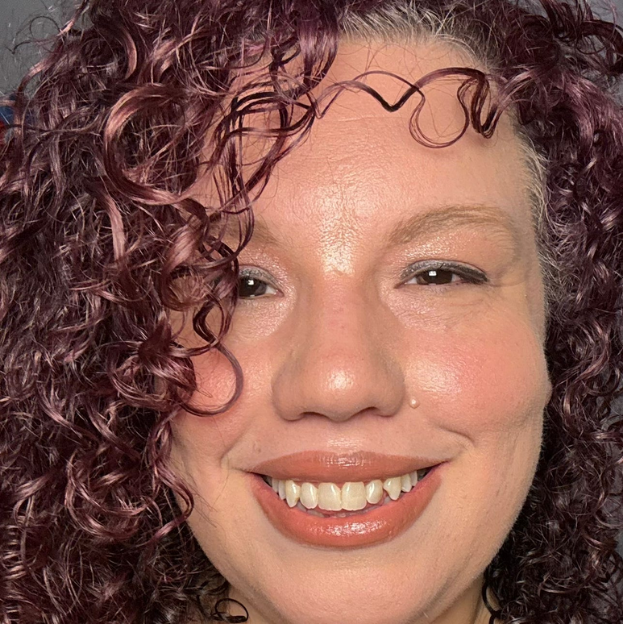
Powerful. Mel Gonzalez is a powerhouse in the cannabis industry, indeed. With over 25 years of experience working in healthcare as a medical assistant, the Bronx-born Latina has made a brand from her authentic, educational posts on Instagram.
If you happen to scroll on “Weedstagram”, you might know her as Queenee (@queeneedakritic). At the time of this interview in April, Queenee had just reached 10,000 followers on her main page. This was a huge milestone, as she has dedicated years to sharing honest cannabis reviews with her supporters. From speaking on screen to her 15k+ followers across platforms, to dabbing on the world stage, Queenee is bridging the cannabis and endometriosis communities to help others suffering with the same illness.
Who is Queenee?
Mel lives with stage 4 endometriosis, a chronic inflammatory disease characterized by endometrial-like tissue lesions that grow outside the uterus. Despite affecting 1 in 10 menstruators, endometriosis is still misunderstood as a gynecological issue. Because of the delay in proper diagnosis and treatment, patients have no other choice than to become their own advocate. This is where the creation of Queenee comes in. Queenee is Mel’s protector. Unlike the phrase “fake it till you make it”, which sometimes has toxic connotations, Queenee’s method is more aligned with showing up as your highest self.
I would describe Queenee’s origin as an example of quantum leaping. Synonymous with quantum jumping, a concept introduced through the now obsolete Bohr model, quantum leaping is when an electron, atom, or a molecule abruptly transitions from one energy state to another. Mel is open about her experience as a neurodivergent adult. Unlike autistic masking, Mel is not trying to be someone else, or like someone else, when she puts on the Queenee persona. Instead, think of it as a suit of armor. When Queenee is in the room, she is honest about how much pain she is in. Whereas Mel might still feel shame or stigma around speaking up.
After three years on lots of medications and smoking flower that didn’t touch the pain, she discovered dabbing. Her favorite terpene combinations are limonene, myrcene, beta-caryophyllene, and humelene. She compares the feeling of myrcene to Percocet and GMO strains to Oxycodone. Grape terpenes in strains like Wedding Cake and Wedding Pie are her go-to recommendations for inflammation, nausea, and seizures. Banana terpenes are for her worst flare days, allowing her to comfortably sleep and pee.
A Path to Diagnosis
It all started with what she thought was a UTI, but ended up being bladder endometriosis. The endometriosis lesions grow their own nerve pathways, causing Mel to develop fibromyalgia. Like many other menstruators, Mel was told that painful periods were normal. But as a seasoned medical professional, she knew better. In 2013, she was diagnosed with adenomyosis, a condition causing painful menstrual cramps. Endometriosis and adenomyosis commonly overlap. Hundreds of health conditions are associated with endometriosis, with the most well-known comorbidities being migraine, asthma, autoimmune diseases, and gastrointestinal conditions.
In order to combat the delay in diagnosis, Mel suggests that everyone, not just girls, need to be taught proper menstrual cycle education at a young age. She urges parents to prioritize their young menstruator’s diet and environment. While rare, endometriosis can also occur in those assigned male at birth. Early puberty and hormonal abnormalities are becoming increasingly more common, which is why spreading awareness is necessary. Mel expresses that endometriosis steals time, money and relationships. Early intervention could save someone decades of physical and financial hardship.
Mel believes that the standard of care must improve. The untrained eye of a gynecologist is not the only opinion you should seek. After a negative pelvic ultrasound, endometriosis should still be considered as a possibility. The next step would be an MRI with a specialized surgeon to look over your imaging. In March, the American College of Obstetricians & Gynecologists published new guidance which aims to encourage providers to diagnose endometriosis clinically. This change will hopefully shorten the 4 to 11 year average gap between the onset of symptoms and an official diagnosis.
An important topic that most people shy away from is sex, and especially how endometriosis affects one’s sex life. During young adulthood, or the “freaky years” as Mel called them, sex should not hurt. Being told that your pain is normal is medical gaslighting. A directory of specialized endometriosis surgeons can be found at https://wulfwomen.com/pages/wulf-women-endometriosis-surgeon-list.
The National Alliance on Mental lIllness recognizes each September as Suicide Prevention Month. This is a time used to raise awareness and provide resources to remove the silence, stigma, and shame associated with suicide. Literature supports that there is a higher prevalence of suicidal ideation and self-harm behaviors in patients with endometriosis. Support groups, in-person or online, can be beneficial when adjusting to a life-changing diagnosis.
Full Circle Moment
Queenee is the dab professional she is today thanks to other women on Instagram. She had never felt confident enough to use a rig and torch until a trip to California. There, she met girls who were happy to show her the ropes. Her story is truly a testament to how important representation is in the cannabis space. Uplifting the voices of POC, women, neurodivergent, and disabled individuals leads to incredible change. Queenee mentioned her future goals include starting a clinical trial and being the first person to dab during a TedX talk.
Cannabis has become more widely recognized as a pain management tool for endometriosis patients. High Times recently featured an article on their website focused on using cannabis for women’s health conditions. Other creators Mel collaborates with include Mia, a cannabinoid science researcher with endometriosis, @cannabisbymia on Instagram, and The Dank Dutchess®, founder of The International Women’s Cannabis Conference.
Resources
Cristina Zarbo, Alessandra Santona, Laura Parolin, Rita Secomandi, Ilario Candeloro, Chiara Malandrino, Luigi Frigerio, Stopping suffering: An exploration of suicidal ideation and its clinical, cognitive and relational correlates among women with a diagnosis of endometriosis, Journal of Affective Disorders, Volume 391, 2025, 119964, ISSN 0165-0327, https://doi.org/10.1016/j.jad.2025.119964.
“International Women’s Cannabis Conference – Build. Become. Blossom.” The International Women’s Cannabis Conference, intlwcc.com/.
Mia. “Synapse & Sativa: Her Lab.” About, renegademia.substack.com/about.
Mulvehill, Suzanne. “From Pelvic Pain to Pleasure: The Case for Cannabis as Women’s Medicine.” High Times, High Times Magazine, 22 July 2026, hightimes.com/women/cannabis-research-womens-health-pain-pleasure/.
“Suicide Prevention Month.” NAMI, www.nami.org/stay-connected/events/awareness-events/suicide-prevention-month/.
“Quantum jump.” Merriam-Webster.com Dictionary, Merriam-Webster, https://www.merriam-webster.com/dictionary/quantum%20jump.
Rei, Christina, Williams, Thomas, Feloney, Michael, Endometriosis in a Man as a Rare Source of Abdominal Pain: A Case Report and Review of the Literature, Case Reports in Obstetrics and Gynecology, 2018, 2083121, 6 pages, 2018. https://doi.org/10.1155/2018/2083121.
Zaman, Mirel. “Endometriosis Linked to Hundreds of Body-Wide Conditions.” HeathCentral.com, HealthCentral, www.healthcentral.com/news/endometriosis/endometriosis-linked-to-hundreds-of-conditions.