
Exploring Hemp’s Molecular Defense: Bridging Agricultural and Medicinal Cannabis Research
Hemp (Cannabis sativa) is a remarkably versatile plant that serves as a source of fiber, food, and medicinally relevant compounds. Beyond its well-known cannabinoids such as cannabidiol (CBD) and tetrahydrocannabinol (THC), hemp produces a diverse array of secondary metabolites that play essential roles in plant defense and human health. Yet, the molecular interactions that regulate these compounds under stress conditions, particularly biotic stress, remain underexplored.
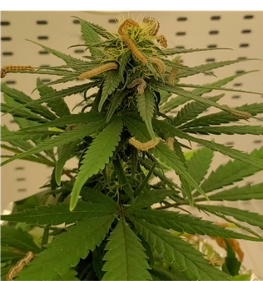
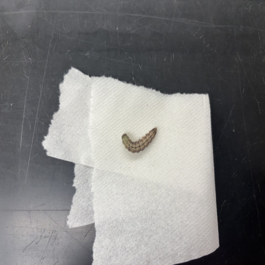
As a PhD student at the University of Maryland Eastern Shore (UMES), my research focuses on understanding how insect herbivory, specifically from the corn earworm (Helicoverpa zea), influences hemp’s biochemical and molecular responses. This pest is a growing concern for hemp production, feeding on developing flowers, and altering the plant’s metabolism. My work aims to uncover how these interactions affect cannabinoid production and the signaling pathways that regulate plant defense, with the goal of supporting sustainable hemp production and improving crop quality.
Investigating the Plant–Insect Interface
In our study, we looked at how corn earworm feeding affects hemp plants by comparing damaged plants to healthy ones. We found that the insect changes how certain genes in the plant behave, especially those involved in defense and chemical production. Genes are like instruction manuals inside a plant (or any living thing). They tell the plant how to grow and how to respond to its environment. For example, just like some people have genes that influence eye color or hair type, plants have genes that influence traits like growth, smell, and resistance to insects. When we say a gene is “more expressed,” it means the plant is using that instruction more often, like turning the volume up on a specific instruction. When a gene is “less expressed,” it is used less, like turning the volume down. For example, if a plant “turns up” genes for defense chemicals, it produces more protective compounds; if it “turns down” other genes, those functions become less active. Gene expression can change depending on the environment. Things like insect attacks, drought, heat, or disease can all “switch on” or “switch off” certain genes. In this case, corn earworm feeding acts as a stress signal, causing the plant to activate defense pathways, including jasmonic acid signaling and the production of cannabinoids that help protect the plant.
In addition to studying changes in the hemp plant’s defense signaling genes, we also measured how the plant produced CBD and THC. We found that insect feeding led to higher levels of these compounds, showing that the plant changes its chemistry when under attack.
CBD and THC are not just randomly made, they are produced through a set of genes that act like step-by-step instructions for making these chemicals. When those genes are more active (more “expressed”), the plant produces more CBD and THC.
This suggests that hemp adjusts its metabolism in response to insect damage by turning on specific genes involved in cannabinoid production. As a result, the plant may increase these compounds as part of its defense system, helping it respond to stress and potentially reduce further damage.
We found that corn earworm feeding changed the hemp plant’s defense signaling and caused it to produce higher levels of CBD and THC. This shows that hemp can adjust its chemistry to protect itself, which is important for the cannabis industry because it highlights how environmental and biological factors can influence the quality and chemical composition of hemp products, affecting both agricultural productivity and the production of medically valuable compounds
Connecting Agricultural Research to Medical Cannabis Science
While my research focuses on how hemp plants defend themselves from insect attack, it also has a wider importance for understanding cannabis. The same natural processes that help the plant protect itself from pests are also responsible for producing cannabinoids like CBD and THC, compounds that people value for their potential health and wellness benefits. This means that when a plant is under stress, it may change how much of these compounds it produces.
This research helps explain why different batches or strains can sometimes feel or work differently. Small changes in how a plant is grown, like insect pressure or environmental stress, may influence the levels of important compounds like CBD and THC. Understanding this can help improve consistency and quality in cannabis products.
A simple way to think about it is that plant stress can change what the plant “makes.” Just like stress can affect how humans feel or behave, stress in plants can change their natural chemistry. Studying this helps scientists understand how plants respond to their environment in general, not just cannabis.
This type of research is important because it connects plant health, farming conditions, and final product quality. By learning how stress affects cannabinoid production, growers may be able to develop stronger plants that produce more consistent and reliable compounds, improving both agricultural performance and product quality.
About the Author : Freweyni Abrha
Future Directions
Future Directions
My long-term goal is to bridge agricultural and medical cannabis research by integrating molecular biology, biochemistry, and applied pharmacognosy. I am particularly interested in exploring how plant-derived cannabinoids function at the biochemical and physiological levels, which could create meaningful connections between crop science and therapeutic innovation. Through this research, I aim to expand our understanding of how environmental and biological factors influence cannabinoid production and how this knowledge can be applied to optimize cannabis cultivation for consistent quality and therapeutic potential.
I am also eager to gain hands-on experience in areas such as cannabinoid extraction and formulation, pharmacological testing, and bioactive compound analysis. Through internships and collaborations, I hope to expand my technical skills beyond plant–insect interactions and contribute to projects exploring the medical potential of cannabinoids. Such opportunities would enhance my understanding of the full cannabis value chain, from cultivation to clinical application, and help build a foundation for developing sustainable and evidence-based approaches in the cannabis industry.
The Broader Vision
The intersection of plant defense research and medical cannabis science is an exciting frontier full of possibilities. By studying how hemp responds to stress from the environment and pests, we can uncover ways to protect the plant and boost the production of compounds that benefit human health. Imagine strains that are naturally resistant to pests and thrive outdoors providing higher-quality hemp for both farmers and the medical cannabis industry.
As this field grows, collaboration between agricultural scientists, pharmacologists, and biotechnologists will be key to developing innovative approaches that support resilient crops and powerful therapeutic applications.
Through the NAP Higher Potential Scholarship, I am excited to be part of a community that values interdisciplinary exploration and applied research. Programs like this provide an invaluable platform to connect agricultural innovation with the evolving landscape of medical cannabis sciencem. Empowering researchers like me to turn curiosity into meaningful impact.