
Cannabis and Driving: What Happens After the High Wears off?
Have you ever felt like you were capable of driving after you’ve smoked? Recent research suggests that some daily or frequent cannabis users could be after some hours. As the plant increases in legality and public interest, a key public safety question remains unanswered: how does cannabis affect driving? Most of the literature surrounding cannabis and driving is inconclusive and some studies even contradict each other’s findings. Read more about the complex relationship between cannabis use and the ability to drive.
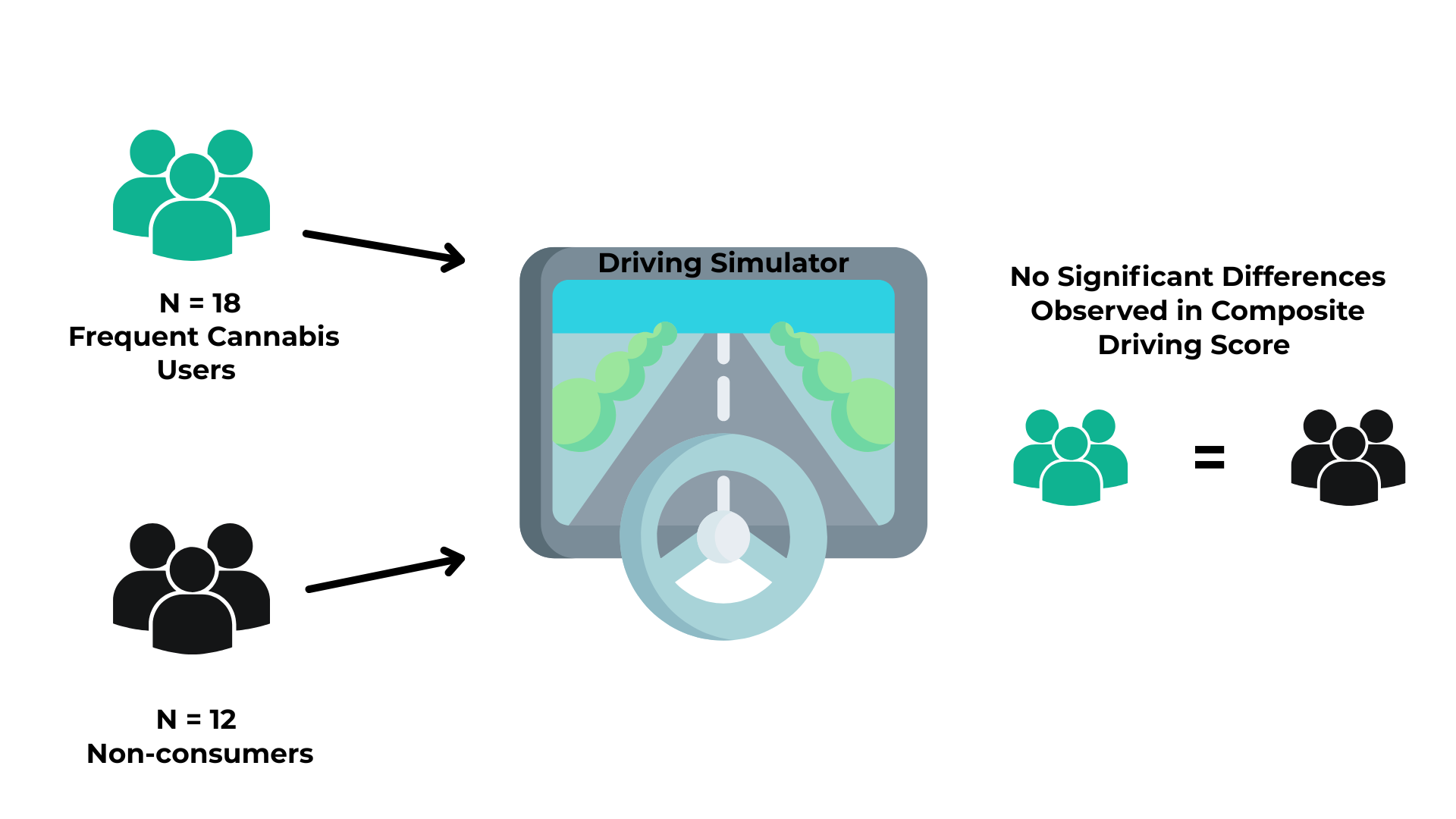
A recent study from the University of San Diego’s Center for Medical Cannabis Research published findings on the short-term residual effects of inhaled cannabis on simulated driving. It begs the question of what impact, if any, cannabis has on driving performance after drug effects have worn off.
The study included 191 regular cannabis users who abstained from use for at least 48 hours. Their abstinence was confirmed by a saliva sample. Following the period of abstinence, the research participants were asked to perform a 25-minute simulated drive that measured various aspects of driving performance.
Operating a car is more than just a few bells and whistles, it involves coordination between several parts of your brain that govern reaction time, perception, and decision-making. It is uncertain what effects THC has on these functions in every population, but existing human research referenced by the study indicates short-term impairment effects for many psychomotor abilities.
Driving performance in this study was measured by a single “Composite Drive Score” calculated by a combination of metrics collected by the simulator like swerving, tailgating, and divided attention. A control group of non-cannabis users completed the same study tasks.
So what were the results? There was no relationship between driving performance and cannabis use frequency. Frequent users performed no worse than the non-using group even when analysis was adjusted for age and gender. Essentially, the study found no evidence of residual driving impairment effects after abstaining for 2 days from cannabis use.
Other clinical trials have demonstrated that short-term cannabis intoxication impairs driving ability in some populations when driving occurs minutes or hours after consumption. However, the current study underscores the importance of distinguishing between short-term and long-term effects, with impaired driving performance being observed hours after smoking but not days after.
These results may have been seen for a variety of reasons such as tolerance in frequent cannabis users, which might render those individuals’ brains less sensitive to the decreased functions in reaction time and other skills. It is also notable that the effects of inhaled THC are known to wear off after several hours, so some participants may experience a recovery of cognitive skills like divided attention and reaction time after the 2 day period of abstinence.
While the findings in this study are quite insightful and provide some explanation as to why some frequent users may feel more comfortable driving hours after consuming, it is important to be cautious that these behaviors are still being studied and many questions remain unanswered. Limitations to this research also exist like any other human study. For example, the sample size was relatively small and only short-term abstinence was tested. Of course, the study also utilized a driving simulator, so it was not fully representative of real-world driving.
So how can we put this all together to determine what it really means for drivers? Well, we can conclude that waiting several hours or longer before getting behind the wheel is probably not a bad idea. In the context of this specific study, if it's been 48 hours your driving ability may be returned to a normal level indiscernible from a sober driver.
Let’s not forget that cannabis is complex and impacts every individual body differently, therefore there is no universally agreed upon “one size fits all” or “legal limit” established in terms of a consensus on cannabis and driving. Responses to cannabis vary based on a multitude of factors like dose, consumption method, and personal biology.
So, if you’re about to get on the road ask yourself how many hours it's been since you’ve consumed. If it's been 48 hours or longer, chances are you’re good to go. Consider waiting if it's only been a few minutes or hours, or if you feel like you may still be impaired. At the end of the day, safe cannabis use is healthy cannabis use.
Read the full study here
Watch a video with one of the authors about the study here
REFERENCES
Mastropietro, K. F.; Rattigan, J. A.; Umlauf, A.; Grelotti, D. J.; Huestis, M. A.; Suhandynata, R. T.; Grant, I.; Fitzgerald, R. L.; Marcotte, T. D. Short-Term Residual Effects of Smoked Cannabis on Simulated Driving Performance. Psychopharmacology2025, 243 (4), 793–804. https://doi.org/10.1007/s00213-025-06880-1.