
Autistic Adults Use Cannabis: the Need for Inclusive, Neurodiversity-affirming Research Paradigms
What happens when one of the medical communities most impacted by Cannabis are the least represented in the research studying it? Our datasets show a significant population of autistic adults that are using cannabis frequently, intentionally, and often in the context of complex, overlapping health needs. The research paradigms that are designed to study and understand cannabis remain disconnected from these lived experiences. Read more about how we can move towards more meaningful, translatable science that bridges this gap.
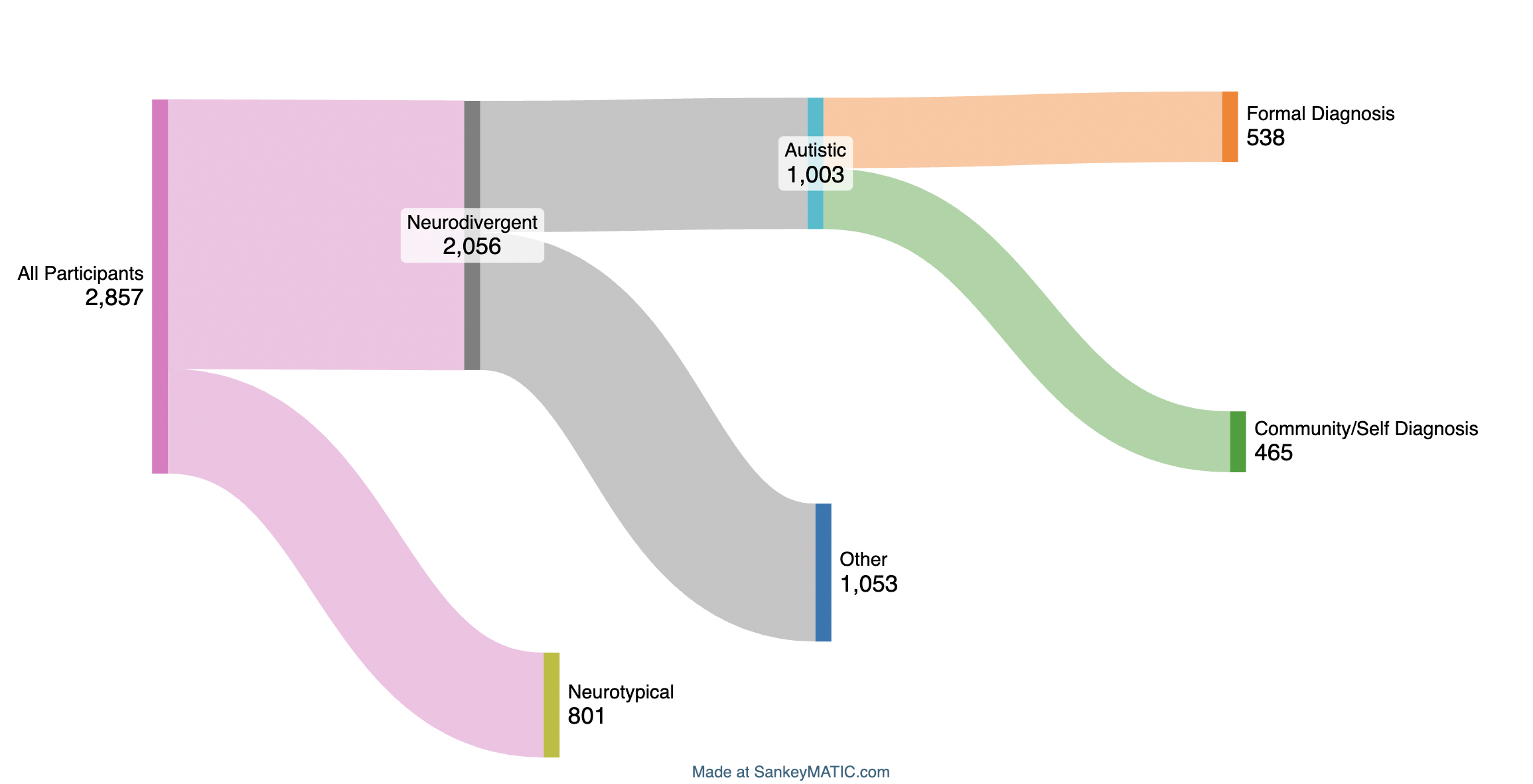
Through a community-based, longitudinal design, the Network of Applied Pharmacognosy (NAP), in collaboration with MoreBetter, collected real-world cannabis use data at an unprecedented scale—prioritizing actual consumers, not idealized clinical populations .
After applying strict completion criteria (≥10 of 14 days of daily consumption logs plus full survey participation), the cleaned dataset includes:
n = 2,857 participants
72% (n = 2,056) self-identified as neurodivergent
35.1% of total sample (n = 1,003) self-identified as autistic
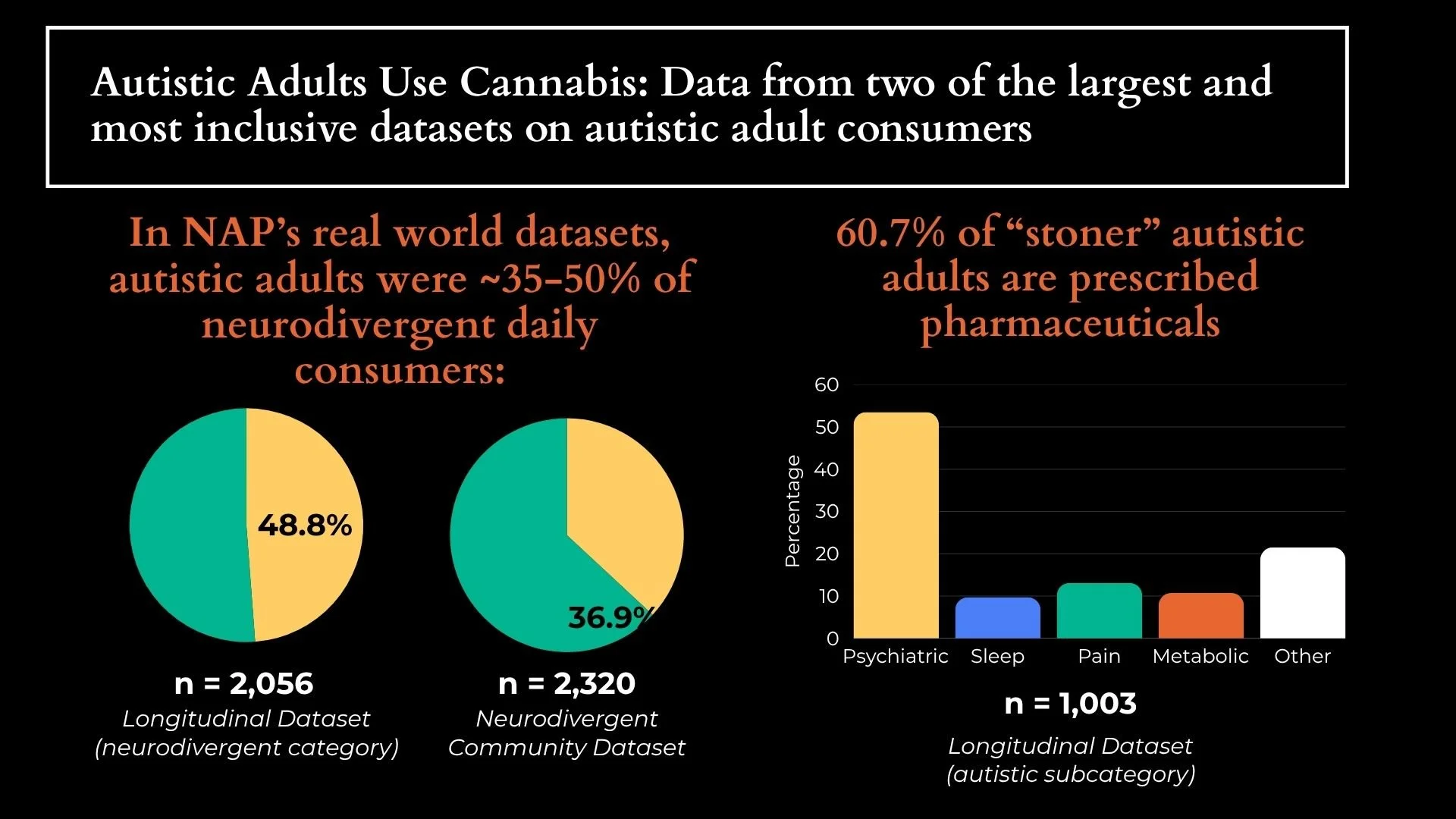
This represents 48.8% of the neurodivergent subgroup
From autistic participants alone, the dataset contains 2,210,799 individual datapoints
While this is still an exploratory sample, this is a statistically meaningful population generating high-resolution, longitudinal behavioral data—something traditional cannabis research has consistently failed to capture.
Key Findings from the Data
Frequent use is the norm:
91.9% of autistic participants use cannabis daily or multiple times per day — showing consistent, intentional use.Medical use without medical support:
85.5% consider themselves medical users, but only 53.6% have a formal autism diagnosis — meaning many are self-managing care outside the healthcare system.High rates of combined medication use:
60.7% use pharmaceuticals alongside cannabis, most commonly psychiatric medications (53.5%).
This raises concerns about drug interactions, since cannabinoids can affect how other medications are processed in the body.Comorbidity is common:
96% report at least one additional condition:ADHD: 73%
Anxiety: 61.8%
PTSD: 54%
Depression: 46.8%
To build better, safer, and more useful cannabis science for this community, we need to intentionally include the neurodivergent cannabis community in research settings. This means studying real-world use patterns and accounting for multiple diagnoses and therapeutic uses of cannabis. The current state of research from the outside looking in creates increased risks for autistic adults using cannabis by reducing the translatability of all research and creating a paradigm where a majority of autistic adults use cannabis with little to no guidance for dose or possible drug-drug interations.
Autistic adults represent a core, active patient population and deserve more representation in the cannabis and mental health research system. Help support NAP in raising visibility and awareness around the net benefit and quality of life research that should be a priority of both academia and the industry.