
Beyond THC: A Focus on THCV
In the article Synthetic, Alternative, Rare? Different cannabinoids and where they come from, we began a very important discussion about different chemical components of the cannabis plant, cannabinoids! One up and coming cannabinoid of interest is Tetrahydrocannabivarin or THCV. This cannabinoid is reported to have some interesting effects compared to those that result from consuming Tetrahydrocannabinol or THC.
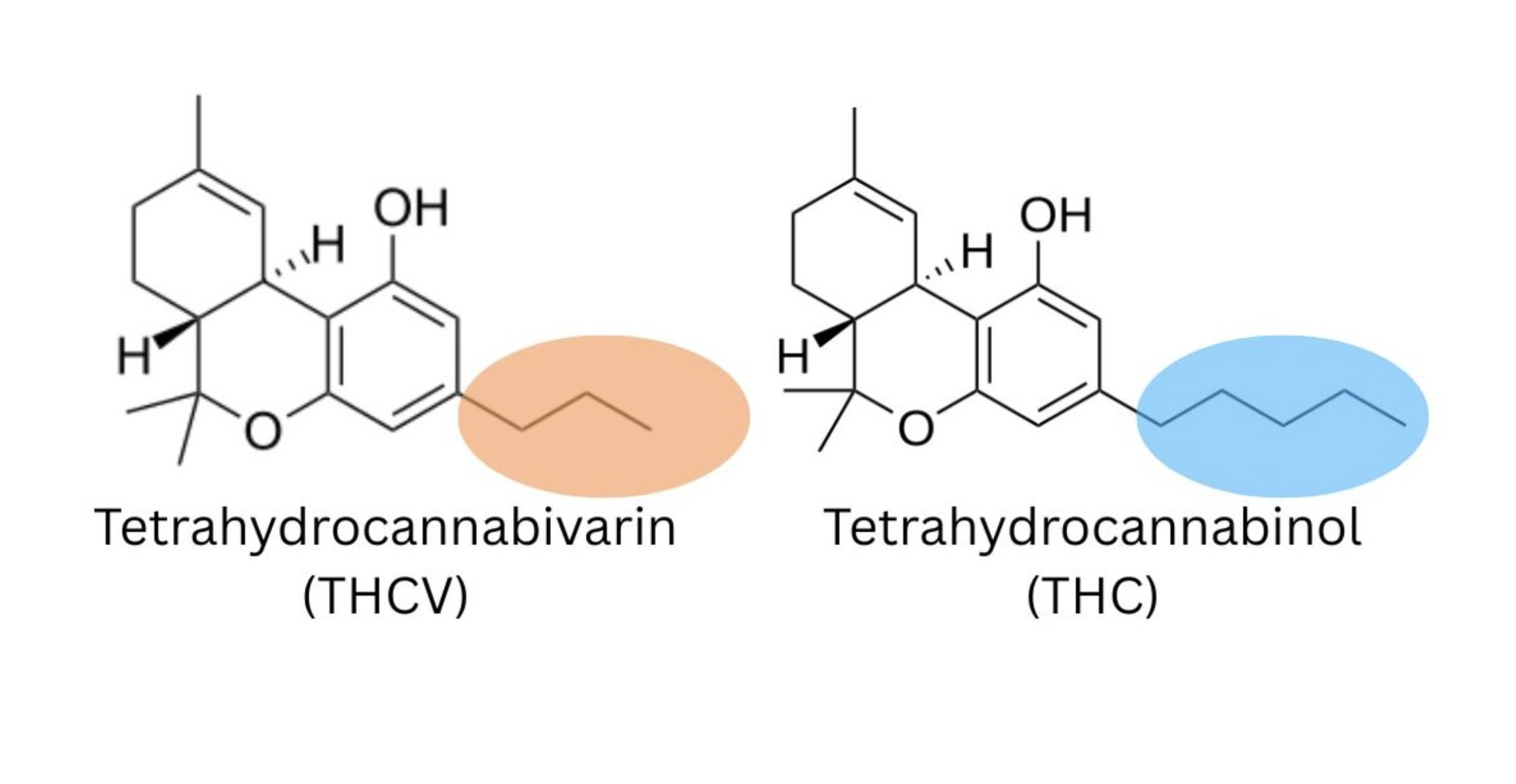
The Chemical Difference
Last time, we mentioned an isomer of Delta-9-THC (THC), Delta-8-THC (D8). Isomer means these compounds share a chemical formula, made up of the exact same molecules but in different arrangements. For example, with D9 and D8 THC the placement of a double bond within the chemical structure on the eighth carbon instead of the ninth is the structural difference. The naming of different THC isomers is based on the placement of this carbon bond, such as in Delta-6-THC (sixth carbon), Delta-8-THC (eighth carbon), or Delta-10-THC (tenth carbon). This change to the molecule typically happens as a result of a chemical process, taking place within the plant or outside of the plant. The classification of ‘isomer’ does not apply to the relationship between THC and THCV as the chemical formulas of these two compounds are slightly different. The chemical difference between these compounds is found in the carbon tail of THCV (highlighted in orange). It is two carbons shorter than the carbon tail of THC (highlighted in blue) (Haghdoost, et al., 2025).
THCV is classified as a minor cannabinoid because it is naturally occurring in the cannabis plant at lower percentages. Some strains, such as the African Sativa strain Durban Poison, are believed to contain higher concentrations of THCV than other strains. However, THC is still the dominant cannabinoid present in the plant material as THCV dominant plants are very rare (Haghdoost, et. al, 2025) It is thought that the difference in the effects presented by these two cannabinoids is due to this difference in tail length. This decreased amount of carbons in THCV makes the binding power of the cannabinoid to cannabinoid (CB1) receptors* weaker than that of THC.
Breaking Down Cannabinoid Receptors: THCV
Cannabinoid receptors, more commonly known as CB1 and CB2 receptors, are proteins that work within the endocannabinoid system. These proteins respond to compounds that fit within the protein, similar to the relationship between a lock and key. The job of the receptor is to send messages from the outside of the cell to the inside of the cell. Certain compounds will only activate (unlock) the receptor, while others will only deactivate (not unlock) the receptor. In the case of THC and THCV, THC would activate (unlock) the receptor, while THCV can activate OR deactivate the receptor depending on different factors.
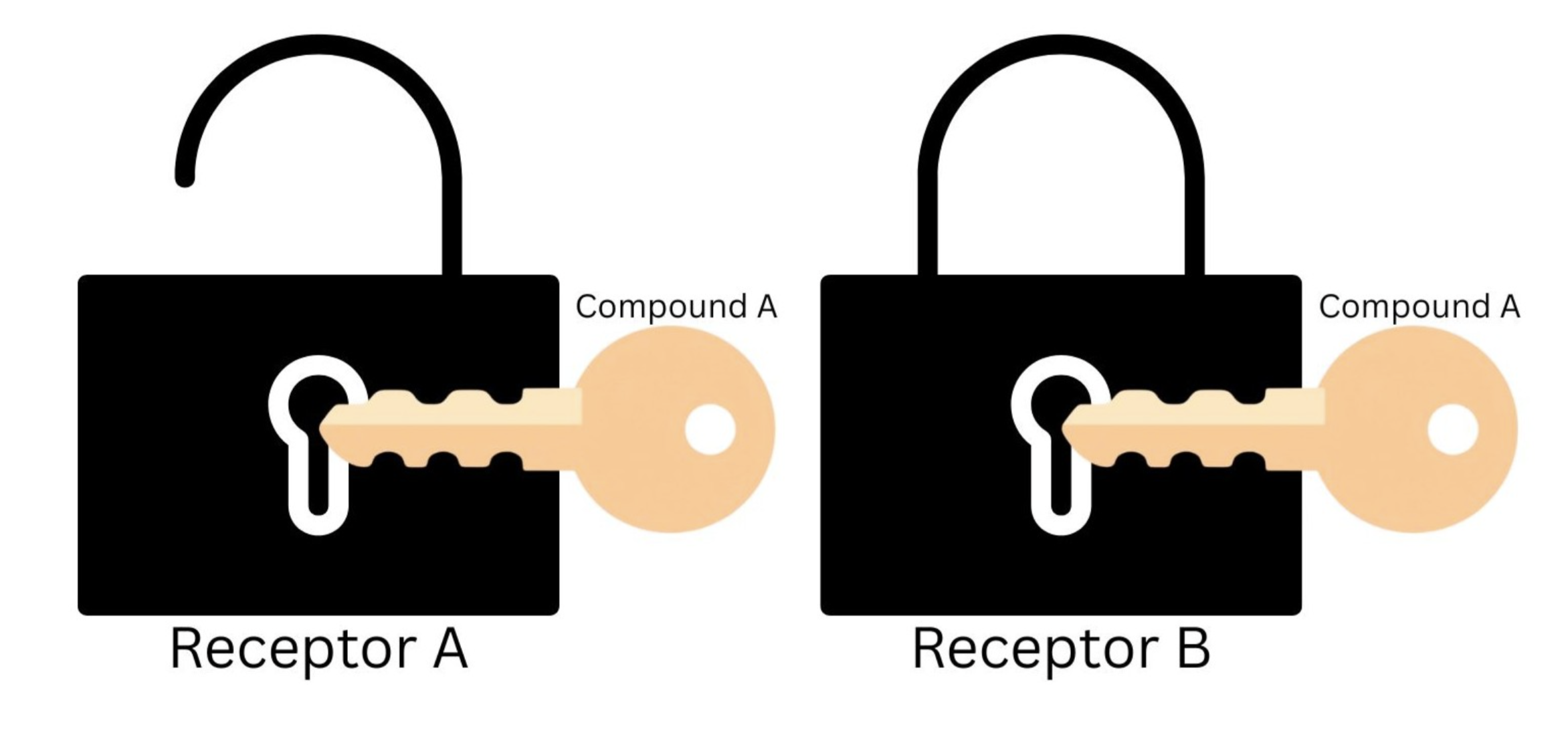
CB1: This receptor type is responsible for the onset of the psychoactive effects of THC and other psychoactive cannabinoids
CB2: A less discussed receptor type that is typically involved in anti-inflammatory processes related to changes in the ECS
To learn more about THCV and receptor interactions check out our blog article: Awkward Family Holidays? Can Your High Just Be Gone? THCV and the CB1 Receptor (Shields, 2025)
Feeling the Difference
So how does THCV feel?
According to Haghdoost, et al., (2025) THCV does not activate, or unlock, cannabinoid receptors (CB1) in the body like THC. However, when it does bind with CB1 receptors, THCV typically deactivates the receptor. This can result in dampened effects of THC if the two are consumed in sequence, starting with THC and ending with low doses THCV. This means that rather than creating the euphoric and appetite increasing effects associated with THC, THCV has the potential to reverse such effects, depending on how much an individual consumes (Haghdoost, et al., 2025). Some individuals report consuming high doses of THCV with THC can result in increased levels of intoxication, while others report low doses of THCV with THC result in decreased intoxication. In a real-world observational study, collaborators MoreBetter Ltd. found that 30mg of THCV in an oral liquid shot HiBeGone reduced the “high intensity” from 7.35 to 4.62 on a scale of 1-10 with 1 being the least intense and 10 being the most intense. However, there are many reasons for differences in effect. Even when consuming the same amount of compounds, our individual endocannabinoid systems have their own complex diversity.
Some of the different effects that THCV has been reported to produce are: appetite suppression,1 decreased activity of THC molecules at CB1 receptors resulting in reversal of intoxication,2 increased metabolic activity 1, and weight loss.1 The stigma against the medicinal benefits of cannabis has resulted in a lack of information on rare cannabinoids, as such the different effects of THCV are highly understudied. However, the research that does exist provides initial confirmation of these reported effects.
Making the Difference: How to learn more!
To continue learning more information about the possible effects and uses of THCV and other minor cannabinoids, it is important to remember the significance of cannabis research as a whole. Cannabis research is the number one proponent for cannabis education and without cannabis research, we would only have anecdotal evidence to present when discussing the different effects of various cannabinoids. Could THCV be the answer to reversing cannabis overconsumption? Only research and time can tell us!
Author Experience:
I am someone who has tried THCV in a few different forms such as edibles and concentrates. I would personally describe the feeling of THCV when consumed in combination with THC, as a mellowed version of THC. I also experienced the effect of decreased activity of THC when combining THC and THCV in edible form. At Thanksgiving my partner and I wanted to make the world a bit more tolerable so we stopped at a hemp store and purchased some gummies that contained 15mg of THC and 5mg of THCV. These gummies normally would’ve been very effective for both of us, however, I have never felt more alert than when I consumed these gummies. If I were to compare it to another combination, I would compare it to consuming an edible with a strong cup of coffee.
Resources:
1. Abioye, A., Ayodele, O., Marinkovic, A., Patidar, R., Akinwekomi, A., & Sanyaolu, A. (2020). Δ9-Tetrahydrocannabivarin (THCV): a commentary on potential therapeutic benefit for the management of obesity and diabetes. Journal of cannabis research, 2(1), 6. https://doi.org/10.1186/s42238-020-0016-7
2. Haghdoost, M., Peters, E. N., Roberts, M., & Bonn-Miller, M. O. (2025). Tetrahydrocannabivarin is Not Tetrahydrocannabinol. Cannabis and cannabinoid research, 10(1), 1–5. https://doi.org/10.1089/can.2024.0051
3. Shields, M. (2025, December 18). Awkward Family Holidays? Can Your High Just Be Gone? THCV and the CB1 Receptor. Network of Applied Pharmacognosy. https://www.appliedpharmacognosy.org/blog/awkward-family-holidays-can-your-high-just-be-gone-thcv-and-the-cb1-receptor