
New Observational Data on Mitragyna speciosa Korth (Kratom) as an Alternative to Coffee
For many people, coffee has been integrated into our lives as a stimulant that helps with energy, focus, and productivity. But caffeine can often cause anxiety, jitters, and energy crashes - especially with daily use. Results from a previous dataset showed promising benefits for mental clarity, focus, and energy using a formulation of Mitragyna speciosa Korth (Kratom) that was formulated to have a more comparable dose to traditional applications. This follow-up collaborative study by MoreBetter showed additional benefits in overall well-being, cognitive functioning, and overall fatigue with decreased probability of participants feeling jittery or experiencing an energy crash.
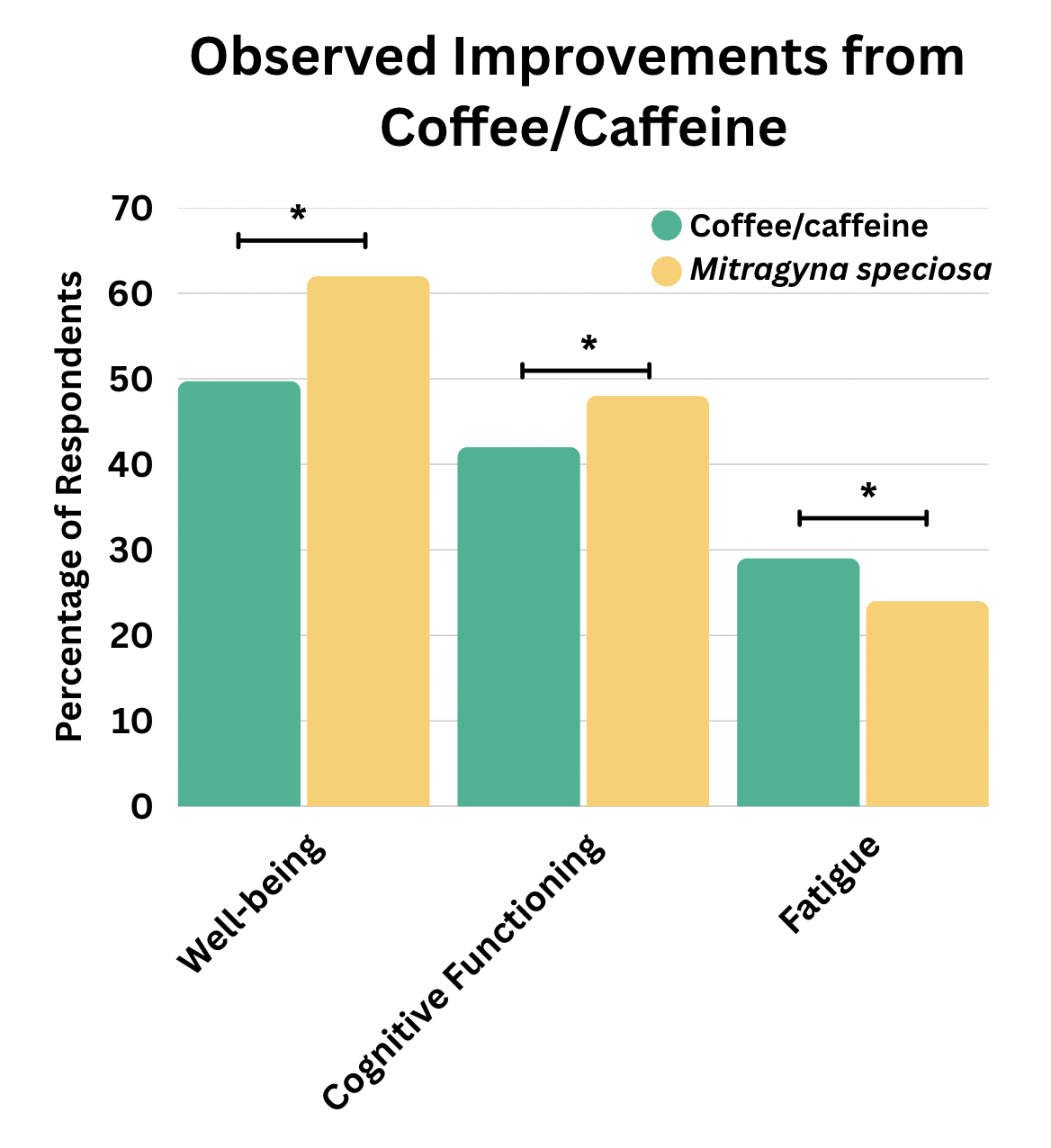
Participants (n=63) reported their experiences during a baseline period with their normal coffee/caffeine intake for one week, then during the following two weeks with an option to consume VIVAZEN’s Focus + Energy Shot.** Participants were asked structured questionnaires daily as well as weekly assessments using validated scales.
Mitragyna speciosa (Kratom) is most commonly associated with pain relief with many products on the market offering very high doses, but its traditional use in Southeast Asia is as a stimulant that helps workers with enhancing focus and energy. This is, in part, because the active compounds in kratom interact with many different systems in the body including the opioid system, serotonin system, and adrenergic system. At different doses, different receptors are being activated which will lead to different effects. We recently analyzed a new dataset on the same formulation that previously showed promising benefits for focus and energy, but this time in comparison to commonly-reported side effects of caffeine, the active compound in coffee and tea.
There was a significant improvement seen in three different validated assessment scores: the WHO-5 well-being score improved by 25.2%, the PROMIS cognitive functioning score improved by 13.2% and the Fatigue Assessment Scale decreased by 17.5%. All of these values were statistically significant (p<0.05) and also met the minimal clinical important difference from the baseline.
These results indicate that there was a significant change (in the positive direction) in participants' well-being, cognitive functioning, and fatigue levels when replacing coffee with this formulation of Mitragyna speciosa (Kratom).
Getting Rid of the Jitters and Afternoon Energy Crashes
One of the most common side effects of coffee is feeling jittery or shaky, which affected around 26% of the participants during their normal coffee intake baseline period. This reduced to 4% of participants during the trial period and was a statistically significant reduction (p<0.001) in the severity of the jitters experienced from a range of responses of none, mild, moderate, and severe. This was consistent with the participant’s self-reported evaluation of experiencing jitters or shakiness. Over half of the participants (57.5%) said they experienced jitters or shakiness less often with 40% of participants saying it was much less often as when drinking coffee.
Another commonly reported side effect of coffee is a mid-day energy crash after the first cup of the day has worn off. Some people will continue to take more coffee throughout the day to alleviate this, but this can lead to an increased overall dose of coffee and other side effects like issues sleeping. During the baseline period, 70% of respondents experienced an energy crash which reduced to 22% during the product-use phase. This was consistent with the participant’s self-reported evaluation where a majority (70%) of participants said they experienced an energy crash less often with 35% of participants saying it was much less often compared to when they drank coffee.
Focus and Energy Can Make or Break Your Day
Struggling with energy levels and the ability to focus or be productive throughout the day can be a driving factor in overall quality of life. Participants reported other improvements like mood, happiness and joyfulness, and their overall rating of their day. While this real-world observational dataset has limitations like a self-selection bias for people who already are open to alternative natural products, reliance on self-reported responses, and variability in many other life factors like sleep quality, stress levels, diet, and exercise, it provides a valuable insight into Mitragyna speciosa (Kratom) as a potential alternative to caffeine, especially for those who are prone to jitters and mid-day energy crashes.
***These statements have not been evaluated by the FDA. These products are not intended to diagnose, treat, cure or prevent any disease.